
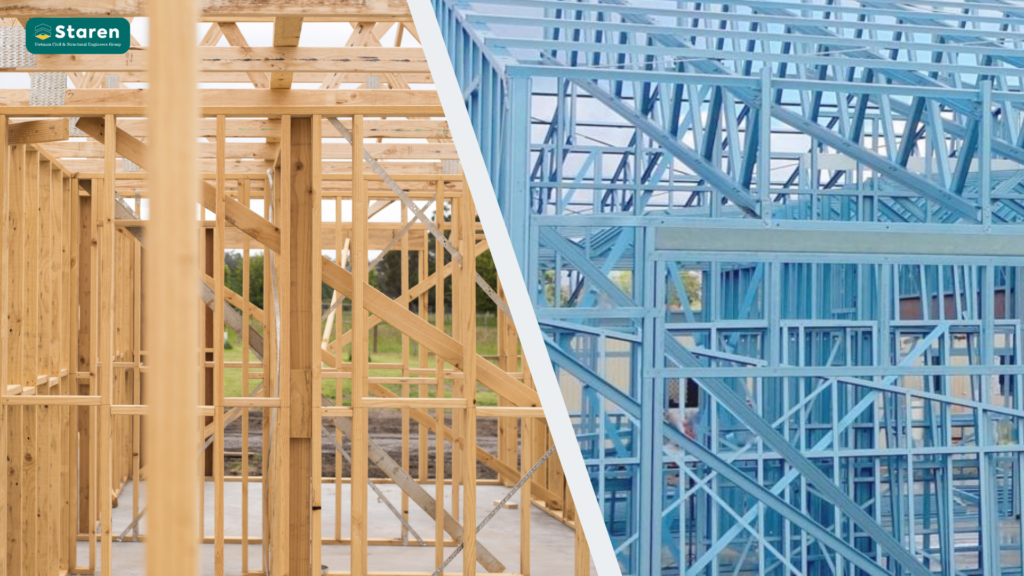
When planning a new building project in Australia — whether residential or commercial — one of the first major decisions is the choice of framing system. Traditionally, timber framing has dominated the Australian housing market due to its affordability and availability. However, in recent years, light gauge steel (LGS) framing has rapidly grown in popularity thanks to its strength, precision, and durability.
Each system offers unique benefits and challenges. Understanding how light gauge steel compares with timber can help builders, architects, and developers make informed decisions that balance cost, performance, and sustainability.
1. Structural Strength and Durability
Light gauge steel framing, made from cold-formed galvanized steel, is known for its exceptional strength-to-weight ratio. Despite being lightweight, it offers high structural integrity and can easily meet the demands of modern architectural designs, including multi-storey or wide-span constructions.
Unlike timber, steel does not warp, twist, crack, or shrink over time. This dimensional stability ensures walls remain straight and true, resulting in cleaner finishes and fewer maintenance issues throughout the building’s life.
Timber, while reliable and easy to work with, is a natural material that expands and contracts with moisture changes. In humid or coastal regions, timber can be prone to rot, mould, or termite attack — major concerns in many parts of Australia. To mitigate this, timber often requires chemical treatments, which add cost and maintenance considerations.
For projects where longevity and low maintenance are key priorities, light gauge steel offers a clear advantage.
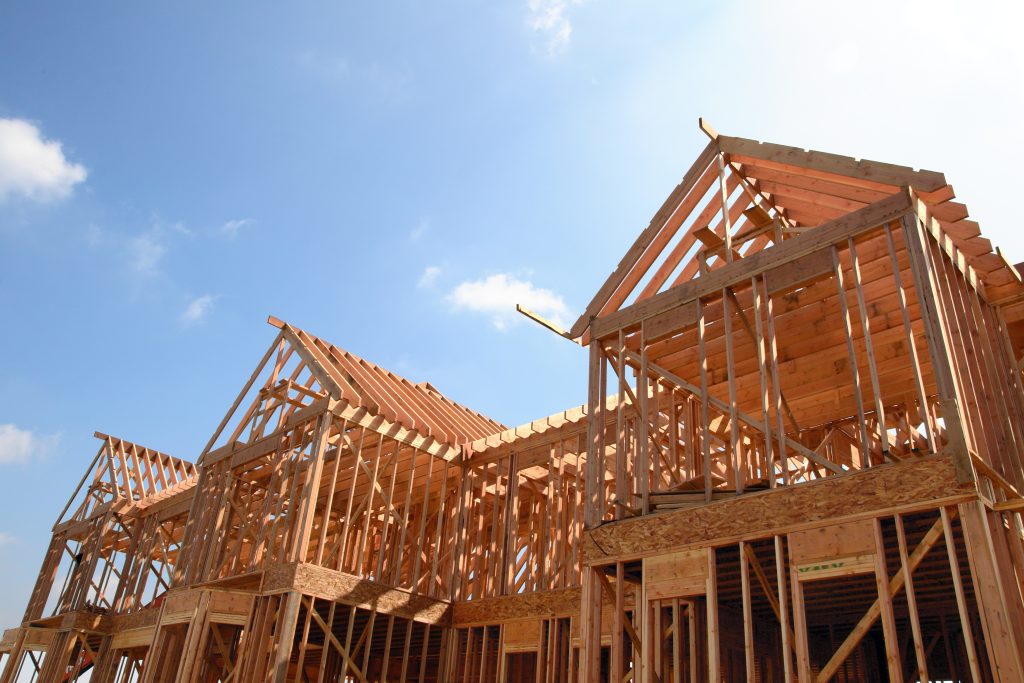
Timber Structural frame
2. Fire, Pest, and Weather Resistance
Australia’s environment poses unique challenges, from high fire risk zones to termite-prone areas and extreme weather events. Steel framing naturally performs better under these conditions.
Light gauge steel is non-combustible, providing greater safety in bushfire-prone regions and helping builders meet the stringent requirements of BAL (Bushfire Attack Level) ratings. It’s also impervious to termites, a major advantage over timber, which often suffers damage even with protective treatments.
Furthermore, steel does not absorb moisture, reducing the risks of swelling, decay, or mould growth. For homeowners and developers seeking a long-lasting, low-risk structure, steel framing delivers superior resilience and safety.
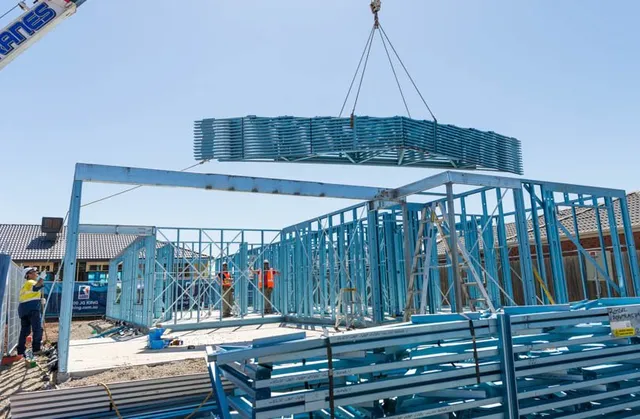
LGS Structural frame
3. Precision and Efficiency in Construction
One of the major advantages of light gauge steel is the level of accuracy in design and fabrication. Using advanced 3D modeling and steel detailing software such as Tekla Structures, steel frames are prefabricated off-site to millimetre precision.
This means components arrive on site ready to assemble, significantly reducing construction time and labour costs.
With timber framing, even though it remains a flexible and familiar option for builders, much of the cutting and assembly still happens on-site. This can lead to measurement variations, higher material waste, and potential rework — all of which increase project timelines and costs.
The precision of prefabricated LGS systems also allows for better integration with modern building technologies, including modular and off-site construction, which are gaining traction in the Australian market.
4. Sustainability and Environmental Impact
Both steel and timber can be sustainable materials when sourced and managed correctly, but they differ in lifecycle performance.
Timber is a renewable material and can act as a carbon store, making it an eco-friendly option when sourced from responsibly managed forests. However, timber’s limited lifespan and vulnerability to decay mean that, over time, repairs and replacements may offset its initial environmental benefits.
Light gauge steel, on the other hand, is 100% recyclable without losing its structural properties. The steel used in Australian construction often contains a high percentage of recycled content. Moreover, because LGS frames are prefabricated, they produce minimal site waste and contribute to cleaner, more efficient construction processes.
In lifecycle analysis, steel often outperforms timber due to its durability, recyclability, and lower long-term maintenance requirements. For builders aiming for Green Star or NABERS certification, steel framing aligns well with sustainability goals.
5. Cost and Long-Term Value
The initial material cost for timber framing can be lower than steel, which makes it attractive for budget-conscious builds. However, when factoring in the long-term savings from reduced maintenance, faster installation, and minimized rework, light gauge steel can prove to be more cost-effective overall.
Additionally, the ability to prefabricate steel components means that project timelines can be shortened, resulting in lower site labour costs and faster project delivery — an important advantage in today’s competitive construction market.
In short, while timber remains a viable option for smaller, low-rise homes, light gauge steel provides better long-term value for modern residential, commercial, and multi-unit developments.
6. Applications in the Australian Market
Across Australia, light gauge steel framing is increasingly used in residential homes, townhouses, apartment buildings, warehouses, and commercial structures. Its compatibility with diverse cladding systems and architectural designs makes it highly adaptable.
With the push toward energy-efficient, durable, and low-maintenance buildings, steel framing aligns well with Australia’s evolving construction standards and sustainability initiatives.
Partner with Staren – Experts in Structural Steel and Light Gauge Steel Detailing
At Staren Steel Detailing, we understand that precision is the foundation of every successful project. Our team of experienced engineers and steel detailers provides high-quality, cost-effective detailing services for both structural steel and light gauge steel framing systems.
We deliver 3D steel modeling, steel shop drawings, and fabrication documentation that comply with Australian Standards, ensuring smooth communication between designers, fabricators, and builders.
Whether your project involves a residential home, multi-storey apartment, or large-scale commercial building, Staren guarantees accuracy, efficiency, and reliability in every detail.
By partnering with Staren Vietnam, you gain a trusted detailing team that helps you reduce errors, save fabrication time, and deliver projects with confidence.
📞 Contact Staren Steel Detailing today to learn how we can support your next residential or commercial project with world-class structural and light gauge steel detailing solutions.