
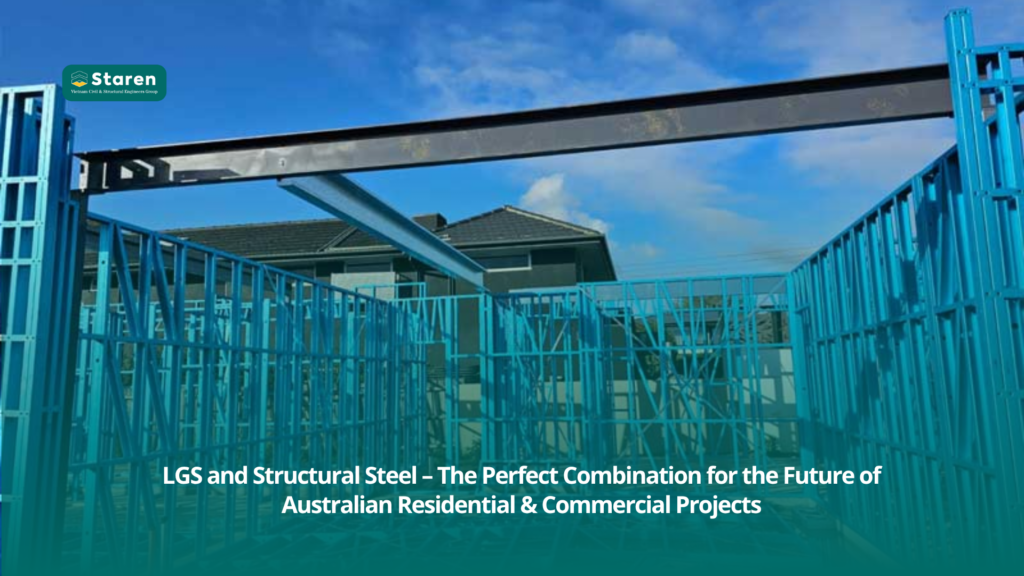
Australia’s construction industry is moving toward smarter, faster, and more sustainable ways to build. With growing demand for efficiency, precision, and environmental responsibility, a powerful hybrid system is emerging as the preferred choice for modern builders and developers: Light Gauge Steel (LGS) combined with Structural Steel.
This combination brings together the lightweight precision of LGS framing and the strength and durability of structural steel, offering the best of both worlds. The result is a construction method that is faster to build, more cost-effective, and more adaptable for both residential and commercial projects.
Here are eight reasons why LGS + Structural Steel is the perfect combination — and the future of construction in Australia.
1. Faster Construction and Less Site Time
In today’s fast-paced market, speed is everything. Both LGS and structural steel are prefabricated off-site using advanced 3D detailing and modeling. This allows components to arrive on-site ready for quick assembly, significantly reducing on-site labour, waste, and weather-related delays.
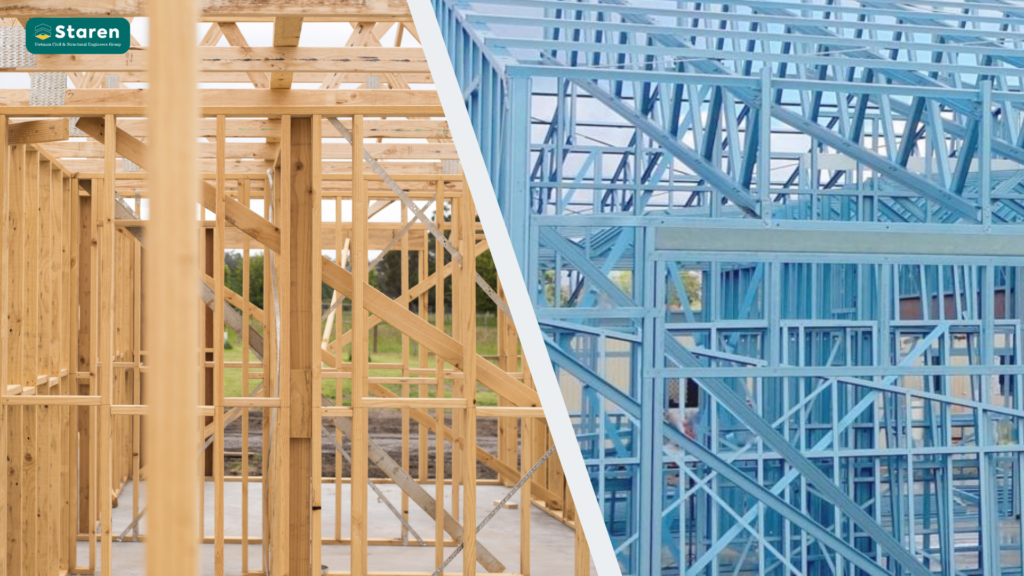
Compared to traditional timber framing, steel systems can reduce construction time by up to 40–50%, helping builders deliver projects faster and more efficiently — a major advantage for developers looking to meet tight timelines or start new projects sooner.
2. Superior Strength and Structural Integrity
Steel is known for its exceptional strength-to-weight ratio. Structural steel provides the heavy-duty support for primary framing and long spans, while LGS is ideal for internal walls, facades, and lighter framing applications.
Together, they form a robust and stable structure that maintains precision over time. Unlike timber, steel does not twist, warp, or shrink, ensuring consistent accuracy and long-term reliability — especially critical for multi-storey or complex commercial structures.
3. Sustainable and Environmentally Friendly
As Australia moves toward greener construction practices, steel framing systems are leading the way. Both LGS and structural steel are 100% recyclable and can be reused without losing quality.
Prefabrication also reduces waste on-site and minimizes environmental impact. In addition, steel framing systems contribute to Green Star ratings and support Australia’s carbon reduction goals by enabling efficient, low-waste, and energy-conscious construction.
4. High Precision and Quality Control
Every steel frame begins with a digital model. 3D BIM (Building Information Modeling) ensures every component is designed and fabricated with millimetre-level accuracy, guaranteeing a perfect fit on-site.
This digital precision drastically reduces errors, eliminates rework, and allows for seamless coordination between engineers, detailers, and builders. The result? Projects that are built exactly to plan — efficiently, safely, and cost-effectively.
5. Fire, Termite, and Moisture Resistance
Steel offers inherent protection against many of the challenges faced by Australian builders. It’s non-combustible, making it ideal for bushfire-prone regions, and completely termite-proof, removing one of the biggest long-term maintenance concerns in residential construction.
Steel also resists mould and moisture damage, ensuring the integrity of the structure remains intact over decades — an advantage that traditional timber simply can’t match.
6. Design Freedom and Architectural Flexibility
Combining LGS and structural steel provides architects and builders with unmatched design freedom. Structural steel enables long, open spans and large spaces, while LGS is perfect for internal framing, façades, and curved or intricate designs.
This hybrid approach allows for creative, modern designs — from contemporary homes and apartments to large-scale commercial buildings — while maintaining strength, precision, and structural performance.
7. Cost Efficiency Over the Project Lifecycle
While the initial cost of steel framing may be comparable to timber, its long-term value is significantly higher. Prefabrication reduces on-site labour costs and construction errors, while steel’s durability means less maintenance and fewer repairs over the life of the building.
Additionally, faster construction means earlier occupancy and quicker project turnover, translating to stronger financial outcomes for builders, developers, and investors alike.
8. Future-Ready for Digital and Modular Construction
As the construction industry embraces digital technology and modular building, steel framing systems fit perfectly into this new era. Both LGS and structural steel integrate seamlessly with off-site manufacturing, BIM coordination, and automated fabrication, making them ideal for modern construction workflows.
This compatibility ensures higher accuracy, lower waste, and consistent quality — all essential for Australia’s growing focus on smart, sustainable, and efficient building solutions.
Why Staren Group is Leading the Way in Steel Detailing
The success of any steel project depends on precision detailing — and that’s where Staren Group makes a difference.
At Staren Group, we specialize in professional steel detailing services for both Light Gauge Steel (LGS) and Structural Steel projects across Australia. With a team of experienced detailers and engineers, we deliver accurate 3D models, shop drawings, and fabrication-ready documentation that fully comply with Australian Standards.
Our detailing ensures that every part fits perfectly, every weld is accurate, and every fabrication step is coordinated — helping fabricators, builders, and site teams work efficiently from design to erection.
We support a wide range of projects, including residential homes, townhouses, apartments, warehouses, and commercial developments. By combining deep technical expertise with cutting-edge detailing technology, Staren Group helps our clients achieve higher accuracy, reduced costs, and faster project delivery.